
Design to Delivery: How a Metal Fabrication Project Works
In today’s competitive construction and industrial sectors, efficiency, precision, and reliability are critical. A well-executed metal fabrication project ensures that structures are built to exact specifications while maintaining durability and cost-effectiveness.
From initial concept to final installation, understanding the metal fabrication process helps businesses make informed decisions and achieve better project outcomes.
At Triple R Metal, we specialize in delivering end-to-end custom metal fabrication services, ensuring every project is completed with accuracy and efficiency.
In this article, we’ll walk you through the complete journey of a metal fabrication project – from design to delivery.
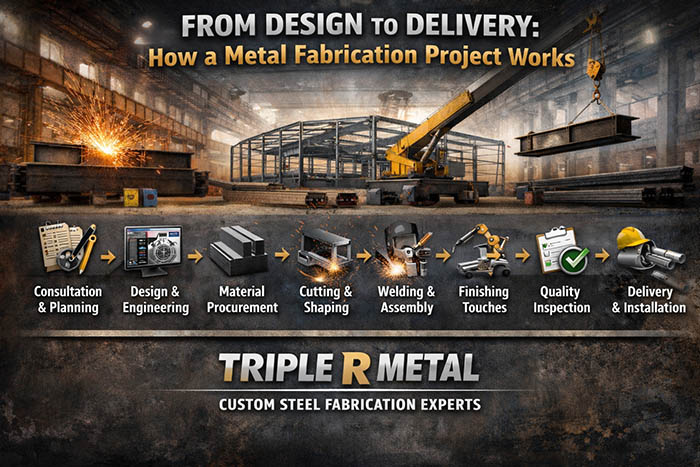
Project Consultation and Requirement Analysis
Every successful metal fabrication project begins with a detailed consultation.
This stage includes:
-
- Understanding project goals and specifications
- Reviewing architectural and engineering drawings
- Identifying material and structural requirements
Clear communication at this stage ensures that the fabrication process aligns perfectly with your project needs.
Design and Engineering Planning
Once requirements are finalized, the next step is design and engineering.
This phase involves:
-
- Creating detailed CAD drawings and 3D models
- Structural analysis and load calculations
- Optimizing designs for efficiency and cost
Advanced design tools help ensure that every component is precise before fabrication begins.
Material Selection and Procurement
Choosing the right material is crucial for performance and longevity.
Common materials used in custom metal fabrication include:
-
- Structural steel
- Stainless steel
- Aluminum
Factors like strength, corrosion resistance, and application determine the best material for your project.
Cutting and Shaping Processes
After design approval, fabrication begins with cutting and shaping the metal.
Modern techniques include:
-
- CNC cutting
- Laser cutting
- Plasma cutting
These technologies ensure high precision and minimal material waste, improving both quality and efficiency.
Welding and Assembly
In this stage, individual components are joined together to form the final structure.
Key processes include:
-
- MIG and TIG welding
- Structural assembly
- Quality inspections during fabrication
At Triple R Metal, strict quality control ensures that every weld meets industry standards for strength and durability.
Finishing and Surface Treatment
Finishing enhances both the appearance and performance of fabricated metal components.
Common finishing processes include:
-
- Powder coating
- Galvanizing
- Painting and polishing
These treatments improve corrosion resistance, longevity, and overall aesthetics.
Quality Control and Inspection
Before delivery, every component undergoes thorough inspection.
This includes:
-
- Dimensional accuracy checks
- Structural integrity testing
- Compliance with industry standards
Consistent quality control ensures that the final product meets all specifications and performs reliably.
Delivery and Installation
The final stage is delivery and on-site installation.
This step involves:
-
- Safe transportation of fabricated components
- Coordinated installation with project teams
- Final adjustments and fitting
Efficient logistics and proper handling ensure that the project is completed on time without complications.
Why Understanding the Metal Fabrication Process Matters
Knowing how a metal fabrication project works allows businesses to:
-
- Improve project planning and coordination
- Reduce delays and unexpected costs
- Ensure high-quality results
Working with an experienced partner like Triple R Metal guarantees a smooth process from start to finish.
Final Thoughts
From initial design to final delivery, a custom metal fabrication project involves multiple stages that require expertise, precision, and coordination.
By choosing a trusted fabrication company like Triple R Metal, you ensure your project benefits from:
-
- Advanced technology
- Skilled craftsmanship
- Reliable timelines
- Long-term durability
If you’re planning your next commercial or industrial project, investing in professional metal fabrication services is the key to success.
Related Posts
How to Choose the Right Metal Fabrication Partner for Your Business
Choosing the right metal fabrication partner can have a major impact on the quality, cost, and timeline of your commercial or industrial project. From custom metal parts and structural steel to welding and precision laser cutting, the right fabrication company can...
Steel vs Aluminum: Which Material Should You Choose for Your Project?
Choosing the right metal is one of the most important decisions in any metal fabrication project. The material you select can affect strength, weight, durability, corrosion resistance, cost, and overall project performance. Two of the most commonly used materials are...
Common Mistakes to Avoid When Ordering Custom Metal Parts
Ordering custom metal parts is a critical step in ensuring the success of any commercial, industrial, or manufacturing project. Whether you're producing structural components, machine parts, brackets, or architectural metalwork, every detail matters. Even small...